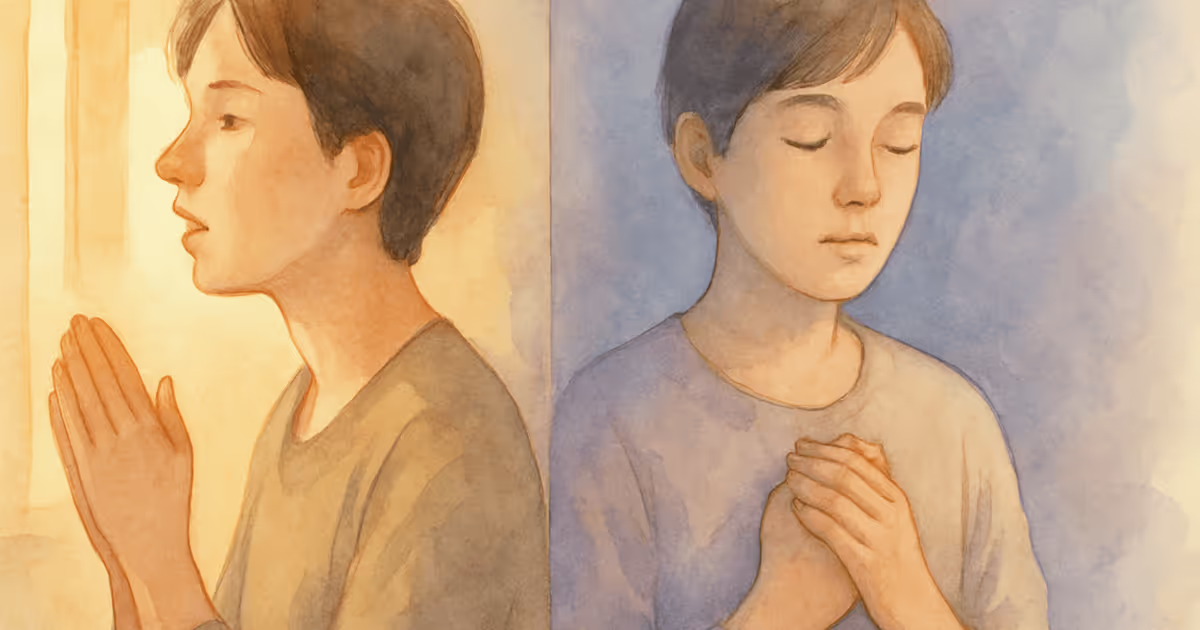
Have you ever felt like you don't know the "right" way to talk to God? You're not alone! Studies show that nearly 55% of Americans pray daily, yet many Christians (especially those new to faith) struggle with knowing how to begin. Here's the beautiful truth: prayer isn't about perfect words or eloquent phrases. It's simply a conversation with your Heavenly Father, and He's waiting to hear from you just as you are.
Whether you're brand new to Christianity or you've been sitting in church pews for years feeling uncertain about your prayer life, this guide will walk you through everything you need to know. I remember my own early days of faith, stumbling over words and wondering if I was "doing it right." The good news? There's no single correct formula. Prayer is personal, intimate, and accessible to everyone who seeks God with a sincere heart!
In this comprehensive guide, you'll discover practical steps to start praying, explore different types of prayer, learn how to overcome common obstacles, and develop a consistent prayer practice that transforms your spiritual life. Let's embark on this beautiful journey together!
Understanding What Prayer Really Is
Look, I'm gonna be real with you. For the first year after I became a Christian, I thought prayer was basically like leaving a voicemail for God. You know, you'd rattle off your grocery list of requests, say "amen," and hope He'd get back to you eventually. Maybe throw in some fancy thee's and thou's if you were feeling spiritual. Boy, was I missing the point.
Prayer isn't a religious ritual where you need to use special words or get the formula just right. It's communication with God. Like, actual communication. The kind where you talk AND listen, where you share what's really going on in your heart, where you don't have to pretend everything's fine when it's not.
I remember sitting in a prayer meeting once, listening to this guy pray these beautiful, poetic prayers. I felt so inadequate. My prayers sounded like a kindergartner compared to his Shakespeare. But here's what I learned that changed everything for me: God wasn't grading our prayers on eloquence. He was listening to our hearts.
Think about it this way. If your best friend only talked to you when they needed something, that wouldn't be much of a friendship, right? Prayer works the same way. Sure, God wants to hear about your needs and concerns. That's part of the relationship. But He also just wants to hang out with you. He wants to hear about your day, your thoughts, your struggles, your joys. The whole package.
The Bible is packed with examples of God desiring this kind of intimate communication with His children. In Jeremiah 33:3, God literally says "Call to me and I will answer you." Not "recite the perfect prayer to me" or "impress me with your vocabulary." Just call. In James 4:8, we're told that when we draw near to God, He draws near to us. It's a two way street, this prayer thing.
Here's a misconception that tripped me up for years. I thought prayer was me talking AT God, giving Him my list of requests, and then waiting to see if He'd deliver. That's not conversation. That's more like shouting your order through a drive through speaker and hoping they get it right. Real prayer includes listening. Sitting quietly. Being open to what God might want to say back to you through His Word, through that quiet voice in your spirit, through circumstances He brings into your life.
Another big misconception? That you need to have your act together before you pray. Oh man, I wasted so much time thinking I needed to clean myself up spiritually before approaching God. That's backwards! Prayer is where we come honestly, mess and all, and let God do the cleaning. He already knows what's going on with you anyway. Authenticity beats perfection every single time.
And here's something that really blew my mind when I finally understood it. Prayer changes us more than it changes our circumstances. Yeah, God can and does answer prayers by changing situations. I've seen it happen. But the real transformation happens inside us when we spend time in His presence. Our perspectives shift. Our priorities get realigned. We start seeing things the way He sees them. That's where the power of prayer really lies, not just in getting what we ask for.
God desires intimacy with you. Not religious performance. Not perfect words. Just you, showing up honestly, ready to connect with your Heavenly Father who loves you more than you can imagine.
Preparing Your Heart Before You Pray
Okay, so this might sound counterintuitive, but some of my worst prayer times happened when I just dove straight in without any preparation. I'd be sitting there trying to pray, but my mind was still replaying an argument from earlier or mentally writing my grocery list. It was like trying to have a deep conversation with someone while scrolling through your phone. Not exactly effective.
Creating a quiet space makes such a huge difference. Now, I'm not saying you need some fancy prayer closet with candles and inspirational posters everywhere. For me, it's literally just my kitchen table in the morning before everyone else wakes up. The key is finding somewhere you can actually focus without constant interruptions. Turn off your phone notifications. Close the laptop. Let your family know you need a few minutes. I learned this the hard way after my kids barged in asking for snacks approximately twelve times during one prayer session.
But here's what I didn't understand for the longest time. Preparing your heart isn't just about the external environment. It's about what's happening internally too. You gotta adopt a posture of humility and openness. And no, I don't mean you literally have to kneel or fold your hands a certain way, though those physical postures can help. I mean coming before God recognizing that He's God and you're not. Sounds obvious, right? But it's easy to approach prayer with demands or expectations about how things should go.
One thing that transformed my prayer life was learning to invite the Holy Spirit to guide my prayers. Sometimes I literally say out loud, "Holy Spirit, I don't even know what to pray right now. Help me." Romans 8:26 talks about how the Spirit intercedes for us when we don't know what to pray. That's not just theological mumbo jumbo. It's practical help for those moments when your brain feels foggy or your heart feels heavy and words just won't come.
I spent years being anxious about saying the right things in prayer. Would God be disappointed if I used casual language? Should I quote Scripture more? Was I being too selfish with my requests? All that anxiety was actually blocking me from genuine communication with God. It's like being so worried about making a good impression on a first date that you can't relax and be yourself. God already knows you completely, imperfections and all. Release those anxieties before you start praying. He's not grading your performance.
Here's something that might sound contradictory but stick with me. You need to approach God with both humility AND confidence. Humility because He's the Creator of the universe. Confidence because you're His beloved child. Hebrews 4:16 tells us to "approach God's throne of grace with confidence." You're not sneaking into the throne room hoping He won't notice you. You're walking in as a child who knows they're loved and welcomed.
Before I pray, I try to take a few deep breaths and clear my mind. Our thoughts are constantly racing, jumping from one thing to another. Social media has made this even worse, honestly. So I spend maybe thirty seconds just breathing and centering myself. I think about who God is. Not what I need from Him, but who He actually is. His character. His faithfulness. His love. This helps shift my focus from me to Him, which is really where prayer should start anyway.
Sometimes I'll even say a simple prayer before my actual prayer time. Something like, "God, help me be present right now. Clear out the distractions and help me focus on You." It sounds a bit weird, praying about praying, but it works.
The goal isn't perfection here either. Some days my mind still wanders. Some days I can't shake that anxious feeling. That's okay. God meets you where you are, not where you think you should be.
The Basic Components of Prayer for Beginners
When I first heard about the ACTS prayer model, I thought it was some complicated theology thing that only seminary students needed to worry about. Turns out, it's actually just a simple framework that helps you remember the basic components of prayer. ACTS stands for Adoration, Confession, Thanksgiving, and Supplication. Fancy words, but the concepts are super straightforward once you break them down.
Adoration is basically praising God for who He is. Not for what He's done for you, but for His actual character and attributes. This one felt really awkward for me at first because I'm not naturally a praise kind of person. But I started simple. "God, You're powerful. You're loving. You created everything I see around me." It doesn't have to be flowery or poetic. Just honest acknowledgment of who God is. Over time, as I read more Scripture and learned more about God's character, my adoration became richer and more specific. I'd think about His faithfulness, His mercy, His wisdom, His creativity.
Confession is where you get honest about your sins and ask for forgiveness. This part made me squirm initially because, let's be real, admitting you messed up is never fun. But there's something incredibly freeing about bringing your failures into the light before God. He already knows about them anyway. 1 John 1:9 promises that if we confess our sins, He's faithful and just to forgive us. I remember the first time I really confessed something I was deeply ashamed of in prayer. The weight that lifted off my shoulders was unexplainable. Don't just breeze through this part with vague "forgive me for my sins" statements. Get specific when you can.
Thanksgiving is expressing gratitude for God's blessings and faithfulness. This component actually ended up changing my whole perspective on life. When you start actively thanking God for specific things, you become more aware of how much He's doing in your life. I keep a list in my phone now of things I'm grateful for, and I reference it during prayer. Some days it's big stuff like healing or provision. Other days it's small things like a good cup of coffee or a text from a friend who was checking on me. Cultivating gratitude through prayer literally rewires your brain to notice blessings instead of just problems.
Supplication is the part most of us are already good at because it's bringing your requests and needs to God. This is where you ask for stuff. Help with that job interview, healing for your sick family member, wisdom for a difficult decision, strength to get through a hard season. God invites us to bring our needs to Him. Philippians 4:6 tells us to present our requests to God. So don't feel guilty about asking. Just remember it's not the only component of prayer.
Now here's the important part that nobody told me when I first learned about ACTS. This isn't a rigid checklist you have to follow in exact order every single time you pray. It's a guide, not a straightjacket. Some prayer times, you might spend most of your time in thanksgiving because you're feeling particularly grateful. Other times, you might need to dive straight into supplication because you're facing an urgent situation. The components can flow naturally based on what's happening in your heart and life.
I've had prayer sessions where I started with confession because guilt was weighing on me, then moved to thanksgiving because I was overwhelmed by God's forgiveness, then naturally flowed into adoration as I reflected on His mercy. There's no prayer police checking to make sure you're doing it in the right order.
Think of ACTS as training wheels. When you're learning to pray and don't know where to start, it gives you a helpful structure. But as you get more comfortable with prayer, you'll find yourself moving between these components more fluidly, letting the Holy Spirit guide the conversation rather than following a formula.
Simple Ways to Start Praying Today
You know what paralyzes most beginners? The idea that they need to pray for like an hour straight or something. I remember thinking real Christians probably spent massive amounts of time in prayer, and I felt guilty that I could barely make it five minutes without my mind wandering. Here's the truth that set me free: start small. Like, really small. Set a timer for three minutes if that's all you can handle right now. Seriously. Three minutes of focused, genuine prayer is better than thirty minutes of distracted, obligatory rambling. As you build the habit, you'll naturally want to spend more time. But don't start by trying to run a marathon when you haven't even learned to walk yet.
If speaking freely to God feels intimidating, there's absolutely nothing wrong with using written prayers. The Book of Common Prayer has been around for centuries, and those prayers are beautiful, theologically rich, and they give you words when you don't have any. I used to feel like using written prayers was cheating somehow, like I wasn't being authentic. But then I realized that sometimes we need help expressing what's in our hearts, and there's wisdom in praying words that have sustained believers for generations.
The Lord's Prayer is probably the best starting point for anyone learning to pray. Jesus literally gave us this prayer as a template in Matthew 6. I spent a month just praying through the Lord's Prayer slowly, really thinking about each phrase. "Our Father in heaven, hallowed be Your name" got me thinking about God's holiness and how I approach Him. "Give us this day our daily bread" reminded me to depend on Him for provision. You can use it word for word, or you can use it as an outline and expand on each section with your own words.
Here's something that revolutionized my prayer life completely. You don't have to save all your prayers for a scheduled quiet time. Talk to God throughout your day like you would text a friend. Stuck in traffic? Thank Him for the extra time to think. Frustrated with a coworker? Ask for patience right then and there. See something beautiful? Tell God you appreciate His creativity. These little conversations throughout the day build intimacy way more effectively than one formal prayer session where you're just going through motions.
Keeping a prayer journal changed everything for me, and I'm not even naturally a journal person. I started simple with a basic notebook. I'd write down what I was praying about, the date, and then leave space to note when and how God answered. Looking back through old journals and seeing God's faithfulness documented in my own handwriting is incredibly powerful. Plus, writing helps me focus when my brain wants to wander. There's something about the physical act of putting pen to paper that keeps me present.
Praying Scripture back to God was a game changer for those times when I didn't know what to say. You take a Bible verse and personalize it. Like Philippians 4:13, instead of just reading "I can do all things through Christ who strengthens me," I'd pray "God, I'm facing this difficult situation at work, and I believe that I can handle it through Christ who strengthens me. Help me remember that Your power is working in me." You're using God's own words, which takes pressure off coming up with perfect language, and you're meditating on Scripture at the same time.
Prayer apps and devotionals designed for beginners can be super helpful too. Apps like Echo Prayer or Pray as You Go give you guided prayer experiences. Some people think using technology for prayer is somehow less spiritual, but that's ridiculous. We use technology for everything else in life. Why not use tools that help us connect with God? I use a devotional app that sends me a daily prayer prompt, and on days when I'm feeling spiritually dry, having that prompt makes all the difference between praying and not praying at all.
The key with all these methods is to actually start. Don't wait until you feel ready or spiritual enough. Just pick one of these approaches and try it today. Right now, even. Your prayer life will grow as you practice, but you got to take that first step.
Different Types of Prayer You Can Explore
I used to think prayer was just one thing. You know, you bow your head, ask God for stuff, and call it a day. But there's actually a whole range of prayer types, and discovering this was like finding out your favorite restaurant has a secret menu. Each type of prayer serves a different purpose and connects with God in a unique way.
Intercessory prayer is when you pray on behalf of other people and their needs. This became really meaningful to me when my friend was going through cancer treatment. I felt so helpless, like there was nothing I could do. But praying for her, standing in the gap, gave me a way to actively participate in her healing journey. You're basically acting as a bridge between someone else and God. It's powerful stuff. I keep a list in my phone of people I'm interceding for regularly. Sometimes I know exactly what they need prayer for, other times I just pray for general blessing and protection over their lives.
Contemplative prayer was honestly the hardest type for me to grasp because it involves more listening than talking. It's quiet meditation where you're just sitting in God's presence, being still, and listening for His voice. My brain does not like to be quiet. The first time I tried contemplative prayer, I lasted maybe forty seconds before I started thinking about what I needed at the grocery store. But with practice, I've gotten better at it. Even just five minutes of silence, focusing on God's presence, centering myself on a single Scripture verse or on who God is, has brought more peace than an hour of anxious praying ever did.
Worship prayer is when you focus entirely on praising and glorifying God without asking for anything. No requests, no needs, just pure adoration. I'll be honest, this felt selfish to skip at first because I had so many things I needed to pray about. But worship prayer recalibrates your heart. It reminds you that God is worthy of praise regardless of what He does for you. Sometimes I put on worship music and just sing prayers to God. Other times I'll go for a walk outside and pray prayers of worship as I observe His creation.
Petition prayer is probably what most of us naturally do because it's bringing your personal requests before God. This is where you ask for things you need. A job, healing, financial provision, relationship restoration, wisdom for decisions. There's nothing wrong with petition prayer. God invites us to ask. But it shouldn't be the only type of prayer in your toolkit. I spent years doing almost exclusively petition prayer, and my relationship with God felt really one sided, like I was just using Him as a cosmic vending machine.
Prayer of lament is something I wish someone had told me about earlier in my faith journey. It's honestly expressing pain, grief, or struggle to God. The Psalms are full of lament. David was constantly crying out to God about his suffering, his enemies, his fears. For some reason, I thought I had to keep things positive in prayer, like God couldn't handle my raw emotions. That's completely wrong. God can handle your anger, your doubts, your deepest pain. In fact, He wants you to bring those things to Him rather than stuffing them down. After I lost my job unexpectedly, lament prayer was the only type of prayer I could manage for weeks. Just pouring out my confusion and hurt to God.
Prayer of thanksgiving is all about cultivating gratitude for blessings you've received. This is different from the thanksgiving component in ACTS because you're dedicating entire prayer sessions to just thanking God. I try to do this at least once a week, sometimes more. I'll sit down and spend ten minutes just listing things I'm grateful for, thanking God for each one. It shifts your whole perspective. You start noticing blessings you were taking for granted.
Here's what I've learned about these different prayer types. They resonate differently depending on your personality and what season of life you're in. Some people naturally gravitate toward contemplative prayer because they're more introverted and reflective. Others connect better with worship prayer because they're expressive. I'm more of an intercessory prayer person myself because I'm wired to care deeply about other people's struggles. Don't force yourself into prayer styles that feel completely unnatural, but do push yourself to try types that are outside your comfort zone. You might be surprised what connects with your heart.
Overcoming Common Prayer Obstacles
Let's talk about the stuff that actually stops people from praying, because I guarantee you're not the only one struggling with these things. The fear of not knowing what to say is probably the number one obstacle I hear about. People freeze up thinking they need to sound spiritual or eloquent. Here's what finally clicked for me: God is your Father, not your English teacher. He's not grading your grammar or vocabulary. Start with simple, honest words. "God, I don't even know what to say right now, but I'm here" is a completely valid prayer. Sometimes my prayers are literally just "Help" or "Thank you" and that's enough.
Feelings of unworthiness and shame are massive prayer blockers. I went through a period where I messed up pretty badly, and I couldn't bring myself to pray for months because I felt too ashamed to approach God. But that's exactly when we need prayer most. The enemy loves to convince you that you're too dirty, too broken, too far gone to talk to God. That's a lie straight from hell. Jesus didn't die for perfect people. He died for messy, broken, struggling people like you and me. Your unworthiness is precisely why you need God's grace, not a reason to stay away from Him.
Dry seasons in prayer are brutal, and nobody warns you about them. You're praying faithfully, but it feels like your words are just bouncing off the ceiling. God feels distant. Your prayers feel mechanical and empty. I went through a six month stretch where prayer felt completely dead. Here's what I wish someone had told me then: keep showing up anyway. Feelings are not the foundation of your relationship with God. His faithfulness doesn't depend on your emotional experience. Those dry seasons often precede significant growth, even though you can't see it happening in the moment.
Unanswered prayer is another huge obstacle that makes people want to quit. You pray and pray for something specific, and it doesn't happen. Or it happens differently than you asked. I prayed for three years for a particular job opportunity, and God said no. I was angry and confused. But looking back now, I can see that He had something better in mind that I couldn't have imagined at the time. Sometimes "no" is God's protection. Sometimes "not yet" is God's timing. And sometimes we won't understand His answers this side of heaven, and we have to trust His character even when we don't understand His methods.
Distractions and wandering thoughts drive me absolutely crazy during prayer. I'll start praying about something serious, and suddenly I'm thinking about what I need to make for dinner or remembering an embarrassing thing I said in seventh grade. Our brains are wired to wander, especially in our distraction saturated culture. Don't beat yourself up when it happens. Just gently redirect your thoughts back to prayer. Some people find it helpful to pray out loud because it keeps them focused. Others use prayer journaling for the same reason. I've learned to give myself grace on this one instead of giving up entirely.
Doubts about whether God is really listening can creep in, especially when you're going through hard times. You're pouring your heart out, but is anyone actually there? Is this just talking to yourself? I've wrestled with this one too. What helps me is remembering specific times when God has clearly answered prayer or shown up in my life. Keeping a record of answered prayers gives you something concrete to look back on when doubt shows up. Also, the fact that you're questioning whether God hears you means you still believe on some level. Total unbelief wouldn't bother questioning.
The comparison trap is real, especially if you pray in groups. You hear someone pray these beautiful, Scripture filled prayers, and yours sound like a kindergartner in comparison. Stop it. Seriously, stop comparing. God doesn't have favorites based on prayer quality. He delights in the simple prayers of a child just as much as the articulate prayers of a Bible scholar. Your prayers are between you and God. Nobody else's opinion matters.
Inconsistency is probably my biggest personal struggle. I'll have a great prayer routine going for two weeks, then life gets busy and suddenly I haven't really prayed in three days. Building sustainable prayer habits requires realistic goals. Don't commit to an hour of prayer every morning if you know that's not maintainable for your current season of life. Start with five minutes that you can actually stick with. Set reminders on your phone. Link prayer to something you already do daily, like having your morning coffee. Progress over perfection.
Building a Consistent Prayer Routine
Consistency in prayer is one of those things everyone talks about but nobody really explains how to actually achieve it. I've started and stopped prayer routines probably fifty times in my Christian walk. Each time, I'd be super motivated for a week, then life would happen, and the routine would fall apart. What finally worked for me wasn't willpower or guilt. It was understanding how habits actually form.
Choosing a specific time each day is way more important than I realized. Your brain likes routines and patterns. If you pray at random times whenever you remember, it's not gonna stick. I tried the whole "I'll pray whenever I feel led" approach, and guess what? I never felt led. Now I pray at 6:15 every morning, right after I pour my first cup of coffee. It's the same time every single day, and my brain has learned to expect it. Some people are night owls and prefer evening prayer. Others pray during lunch breaks. The actual time doesn't matter as much as the consistency of having a set time.
Starting small with realistic goals saved my prayer life, honestly. I used to think I needed to pray for thirty minutes minimum or it didn't count. That's ridiculous pressure to put on yourself, especially as a beginner. Five minutes is enough. Seriously, just five minutes of genuine, focused prayer is infinitely better than thirty minutes of distracted, obligatory rambling where you're watching the clock. I started with literally three minutes and gradually increased as the habit became more natural. Don't set yourself up for failure by committing to something you can't sustain.
Environmental cues are game changers for building habits. This is stuff like having a specific chair you always sit in for prayer, keeping your Bible in the same spot, or lighting a candle when you start praying. Your brain picks up on these cues and knows it's prayer time. I have this worn out leather chair in my living room that's become my prayer spot. Now when I sit in that chair in the morning, my brain automatically shifts into prayer mode. It's like Pavlov's dogs but for talking to God.
Accountability partners or prayer groups provide encouragement that you can't manufacture on your own. I have a friend who texts me every morning after she's done her prayer time, and I text her back when I've done mine. Sounds simple, but knowing someone else is checking in makes me way more consistent. There's no shame or judgment if one of us misses a day. It's just gentle accountability. Prayer groups work similarly. When you commit to praying with others weekly, you show up even on days when you don't feel like it.
Tracking your progress can be helpful, but you got to be careful not to create legalistic pressure. I use a habit tracking app that lets me check off days when I pray. Seeing a streak of consecutive days is motivating. But here's the thing, if I miss a day, I don't spiral into guilt and give up entirely. I just start again the next day. The goal isn't perfection. The goal is progress and consistency over time. Some people use journals to track their prayer journey. Others use simple checkmarks on a calendar. Find what works without turning it into another source of shame.
Adjusting your routine as life circumstances change is crucial for long term sustainability. When I had a newborn, my morning prayer routine completely fell apart because I was exhausted and sleep deprived. Instead of giving up, I shifted to praying while feeding the baby at night. When I started a new job with an earlier start time, I had to move my prayer time. Your routine needs to flex with your life, not stay rigid and then break entirely when circumstances change. Give yourself permission to adapt.
Life seasons change all the time. Maybe you're in a busy season at work and can only manage five minutes. That's okay. Maybe you're in a season where you have more margin and can extend your prayer time. That's great too. Don't compare your current season to someone else's or even to your own past seasons.
Celebrating small wins keeps you motivated on this journey. When you hit one week of consistent prayer, acknowledge that. When you have a prayer time where you felt genuinely connected to God, take a moment to be grateful for it. When you notice growth in your prayer life, like finding it easier to focus or feeling more comfortable talking to God, celebrate that progress. We're so quick to focus on where we're failing, but recognizing growth is equally important.
I keep a note on my phone where I jot down little wins. Things like "prayed for fifteen minutes without checking the clock" or "felt God's presence really strongly today" or "kept my prayer routine going even though this week was crazy." Looking back at those notes reminds me that I'm actually making progress, even when it doesn't feel like it in the moment.
Learning to Listen in Prayer
For years, my prayers were basically monologues. I'd talk at God for ten minutes, say amen, and move on with my day. It never occurred to me that prayer was supposed to be a conversation, which means listening as much as talking. That shift in understanding changed everything, but learning to actually listen has been way harder than learning to speak.
Prayer includes both speaking and listening, but most of us only do the first part. We're really good at telling God our problems, our needs, our opinions. But then we don't stick around to hear what He might want to say back. It's like calling a friend, dumping all your stuff on them, and hanging up before they can respond. That's not conversation. That's just venting. I had to intentionally build silence into my prayer times, which felt super awkward at first.
Practicing silence and stillness to hear God's gentle whisper is not easy in our noisy world. Everything in our culture is loud and fast and demanding our attention. Sitting quietly feels uncomfortable, almost wrong. The first time I tried to spend five minutes in silence during prayer, my brain went haywire. Every random thought I'd ever had decided to show up right then. But I kept trying. I'd sit quietly, focus on my breathing, and just wait in God's presence. Over time, it got easier. Not easy, just easier.
God's voice is described as a "gentle whisper" in 1 Kings 19:12. He's not usually shouting at you. He's not competing with the noise. You have to get quiet enough to hear that whisper. Some days I hear nothing. Some days I sense His presence without any specific words. And some days, I get clear direction or comfort or conviction about something. You can't force it, and it doesn't happen every time.
Recognizing how God speaks takes practice because He doesn't usually use an audible voice. He speaks through Scripture more than anything else. I'll be reading my Bible, and a verse will jump out at me and feel specifically relevant to something I'm going through. That's God speaking. He also speaks through circumstances, like when doors open or close in ways that you couldn't have orchestrated yourself. And He speaks through peace. You're wrestling with a decision, and one option just settles in your spirit with a sense of peace while the other creates anxiety. That peace is often God's guidance.
Discerning God's voice from your own thoughts and external influences is tricky, and I've definitely gotten it wrong before. I've thought God was telling me things that were really just my own desires or fears talking. Here's what I've learned about testing whether something is from God. Does it align with Scripture? God will never tell you something that contradicts His written Word. Does it produce peace or anxiety? God's voice brings peace, even when it's challenging. Does it lead you toward or away from God? The enemy's voice pulls you away from intimacy with God. Does it build up or tear down? God's conviction is different from condemnation. He corrects in love, not shame.
When I'm not sure if something is God's voice or just my own thoughts, I wait. If it's really from God, He'll confirm it through multiple ways. Maybe through a conversation with a trusted Christian friend, maybe through a sermon, maybe through Scripture that reinforces the same message. I've learned not to make major decisions based on a single impression during prayer.
Journaling what you sense God communicating during prayer times has been incredibly helpful for me. I keep a prayer journal where I write down things I feel like God is saying. Sometimes it's just a word or phrase. Sometimes it's a longer impression. Writing it down helps me process it and also gives me something to look back on later. I can see patterns. I can see when God was preparing me for something before I even knew it was coming. I can see His faithfulness documented in my own handwriting.
Being patient is maybe the hardest part of learning to listen. Hearing from God is a skill developed over time, not something you master in a weekend. I spent months feeling like I was doing it wrong because I wasn't hearing anything dramatic or clear. But over time, I started recognizing God's voice more readily. It's like learning to recognize a friend's voice in a crowded room. At first, you're not sure. But the more time you spend with them, the more easily you can pick out their voice.
Don't get discouraged if listening prayer feels foreign or fruitless at first. Keep showing up. Keep getting quiet. Keep being available to hear what God wants to say. Even the silence itself is valuable because you're making space for God instead of just filling every moment with your own words.
Praying With Scripture and Biblical Examples
When I didn't know how to pray, I looked at how Jesus taught His disciples to pray. They literally asked Him "Lord, teach us to pray" in Luke 11:1, which makes me feel better because even the guys who walked with Jesus needed prayer instruction. Jesus gave them the Lord's Prayer, which is this perfect template that covers everything. It starts with worship and acknowledging God's holiness, moves into praying for His will to be done, asks for daily provision, includes confession and forgiveness, and ends with protection from temptation. That's the whole framework right there. When I'm stuck and don't know what to pray, I walk through the Lord's Prayer slowly, expanding each section with my own words and specific situations.
Examining prayers of biblical figures has taught me so much about honest communication with God. David's prayers in the Psalms are raw and real. He's crying out in anguish one minute and praising God the next. He doesn't clean up his emotions before bringing them to God. Daniel prayed three times a day even when it literally put his life in danger. That's the kind of commitment and prioritization I want. Paul's prayers for the early churches, like in Ephesians 3, are focused on spiritual growth and knowing God more rather than just asking for comfortable circumstances. Reading these prayers shifted my perspective on what to pray for.
Using the Psalms as a prayer book changed my prayer life completely. There's a Psalm for literally every emotion and situation you could be experiencing. Feeling abandoned? Psalm 13. Grateful and joyful? Psalm 100. Angry at injustice? Psalm 94. Overwhelmed by God's creation? Psalm 19. I went through a really dark season of depression, and I couldn't formulate my own prayers. So I just prayed through Psalms. I'd read a Psalm slowly, let it express what I couldn't put into words, and make it my prayer to God. It gave me language for my pain when I had none of my own.
Incorporating Bible promises into your personal prayers makes your prayers more powerful because you're literally praying God's own words back to Him. When I'm anxious, I pray Philippians 4:6 and 7. "God, Your Word says not to be anxious about anything, but to bring everything to You in prayer. So I'm bringing this situation to You right now, and I'm asking for Your peace that surpasses understanding to guard my heart and mind." You're standing on God's promises, reminding yourself of His character and His Word. It builds faith.
I started memorizing Scripture passages specifically to use in prayer, and it's been a lifesaver for those moments when words fail. When I'm too upset or too tired to think clearly, I have verses stored up that I can pray. Isaiah 41:10 about not fearing because God is with us. Psalm 46:1 about God being our refuge and strength. Romans 8:28 about all things working together for good. These verses come to mind when I need them most because I've taken the time to memorize them. It's like having emergency supplies stored up for spiritual crises.
Letting God's Word shape the content and direction of your prayers keeps you aligned with His will instead of just your own preferences. Before I started praying with Scripture, my prayers were mostly about my comfort and my agenda. Reading the Bible showed me that God cares more about my character than my comfort, more about my holiness than my happiness. Now my prayers have shifted. I still bring my needs to God, but I also pray for spiritual growth, for wisdom, for opportunities to serve others, for my heart to align with His heart.
One practice that's been really meaningful is praying through a passage of Scripture verse by verse. I'll take something like Psalm 23 and pray through each line. "The Lord is my shepherd" becomes "God, thank You that You're my shepherd, that You're guiding me and caring for me." "I shall not want" becomes "Help me trust that You'll provide everything I truly need." It slows me down and forces me to really think about what the Scripture is saying.
Biblical examples also show us that prayer doesn't have to be formal or in a special location. Jesus prayed on mountains, in gardens, in the middle of crowds. Paul and Silas prayed in prison. You can pray anywhere, anytime, in any circumstance. The biblical figures we read about had real struggles, real doubts, real fears. Their prayers weren't perfect. But they were genuine and God heard them. That gives me hope that my imperfect prayers matter too.
What to Do When You Don't Feel Like Praying
Let me just say it straight up. There are days when I absolutely do not feel like praying. I'm tired, distracted, spiritually dry, or just not in the mood. For a long time, I thought that meant something was wrong with my faith. Like real Christians probably always wanted to pray, and I was just failing. That's nonsense. Even the most mature believers have days when prayer feels like a chore.
Recognizing that feelings are not the foundation of prayer was honestly a revelation for me. We live in a culture that's obsessed with feelings and doing what feels right in the moment. But relationships aren't built on feelings alone. They're built on commitment and consistency, even when you don't feel like it. My relationship with God works the same way. Some days I feel close to Him and prayer flows easily. Other days I feel nothing, and prayer feels empty. But God's presence and faithfulness don't change based on my emotions. He's there whether I feel Him or not.
Pushing through resistance with simple, honest words has gotten me through more dry prayer times than I can count. When I don't feel like praying, I start with something super basic like "Help me, God" or "I don't want to be here right now, but I'm showing up anyway." That's not disrespectful. That's honest. God already knows what you're feeling. You're not fooling Him by pretending to be spiritually pumped when you're not. Some of my most meaningful prayers have started with "God, I really don't feel like praying right now, but here I am."
Remembering that the Holy Spirit intercedes when we don't know what to pray takes so much pressure off. Romans 8:26 literally says the Spirit helps us in our weakness and intercedes for us with groanings too deep for words. On days when I can't formulate thoughts or prayers, I'll just sit in silence and trust that the Holy Spirit is translating my heart to God. Sometimes I'll just say "Holy Spirit, pray through me right now because I got nothing." And that's enough.
Using music, worship songs, or guided prayers to reignite your spirit can break through spiritual dryness better than forcing yourself to pray. I'll put on a worship playlist and just listen, not even trying to pray at first. The music shifts something in my heart and suddenly I'm praying without even realizing it started. Or I'll use a guided prayer from an app or devotional. Having someone else's words to follow takes the pressure off when my own well is dry. There's no shame in needing help to engage in prayer.
Being honest with God about your struggles with prayer itself feels weird at first, but it's incredibly freeing. I've had prayer sessions where I literally spent the whole time telling God that I was struggling to pray, that I felt distant from Him, that I didn't know what to say. That IS prayer. You're still communicating with God, still showing up, still being real with Him. He's not offended by your honesty. In fact, I think He prefers raw honesty over fake spirituality any day.
I went through a season where I told God almost daily "I don't know how to do this anymore. Prayer feels pointless and I'm just going through motions." I felt guilty saying it, but I also couldn't pretend everything was fine. Looking back, that season of brutal honesty actually deepened my relationship with God because I stopped performing and started being real.
Trusting that showing up matters even when it feels mechanical is huge. There have been countless days where my prayers felt rote and lifeless, where I was just checking a box. But you know what? I still showed up. And over time, those mechanical prayers kept the connection alive until I moved into a season where prayer felt vibrant again. Consistency matters more than intensity. A year of imperfect, inconsistent, sometimes mechanical prayers will grow your faith more than waiting around for perfect motivation that never comes.
Think about marriage or any long term relationship. There are seasons where you feel crazy in love and connected. There are also seasons where it feels routine or even difficult, but you keep showing up because commitment matters more than feelings. Your prayer life has seasons too. The dry seasons don't mean you're doing it wrong or that God has abandoned you. They're just part of the journey.
When you really don't feel like praying, start with sixty seconds. Just sixty seconds of acknowledging God's presence. That's it. You can do sixty seconds. Often, once you start, you'll find yourself continuing longer. But even if you don't, those sixty seconds count. God sees your effort. He honors your faithfulness even when it doesn't feel significant to you.
Conclusion
Starting a prayer life as a beginner doesn't require theological degrees or memorized formulas. It simply requires a willing heart and the courage to speak honestly with your Creator! Throughout this guide, we've explored the foundations of prayer, from understanding its true nature as relationship with God to practical steps for building a consistent prayer routine. Remember, your prayers don't need to be polished or impressive. They just need to be genuine.
God is not looking for perfection. He's looking for connection. Every prayer you offer, no matter how simple or stumbling, reaches the ears of a loving Father who delights in hearing your voice. As you begin this journey, be patient with yourself. Some days your prayers will flow easily, and other days you'll struggle to find words. Both are completely normal and acceptable to God!
Take the first step today. Set aside just five minutes, find a quiet space, and simply talk to God as you would a trusted friend. Share your joys, your fears, your questions, and your gratitude. As you practice consistently, you'll discover that prayer becomes less of a duty and more of a delight. It becomes a lifeline that sustains you through every season of life.