Do you have to attain a certain prayer posture when you pray? This brief prayer posture guide should help answer that question. For those new to praying, spirituality, and the practice of Christianity, prayer is a very important aspect of faith, believe, and trust in God our Heavenly Father. Praying is how we communicate with God and his son Jesus Christ our Lord and Savior. Is there a wrong or right way to pray?
About Praying – a Brief Prayer Posture Guide
When wondering about prayer postures, those new to Christianity or those growing in faith and spirituality should always turn to the source. A perfect prayer posture guide of sorts can be found in the Holy Scriptures.
The Bible is a perfect source for those wanting to learn more about praying and how it’s done, along with the reasons why prayer is so important to Christians. Prayer is communicating with our Heavenly Father and His Son Jesus Christ our Lord. Prayer is a commitment that many Christians take in their everyday lives. You don’t have to be asking for a favor to talk to God. So how exactly do you talk to God? Should you assume a certain position?
The Old and New Testaments of the Scriptures alone provide examples of different prayer postures. You’ll find more when reading your Bible, but this guide focuses on a handful so that you can gain a better understanding of the many different ways you might take when praying. Take the time to open your Bible and read the following passages that describe numerous prayer postures of important people of the Bible:
Standing prayer posture found in the Old Testament book of Nehemiah (9:5) – “… Stand up and bless the Lord your God forever and ever! Blessed be Your glorious name, which is exalted above all blessings and praise!”
Kneeling prayer posture found in the Old Testament book of Ezra (9:5) – “… At the evening sacrifice I arose from my fasting; and having torn my garment and my robe, I fell on my knees and spread out my hands to the Lord my God, and said, ‘oh my God: I am too ashamed and humiliated to lift up my face to You, my God; for our iniquities have risen higher than our heads, and our guilt is grown up to the heavens.’”
Sitting prayer posture found in the Old Testament book of First Chronicles (17:16-27), the first part of which reads, “Then King David went in and sat before the Lord…”
Bowing prayer posture found in the Old Testament book of Exodus (34:8) – “So Moses made haste and bowed his head toward the earth, and worshiped.”
Hands uplifted prayer posture found in the New Testament book of First Timothy (2:8) – “Therefore I desire that the men pray everywhere, lifting up holy hands, without wrath and doubting…”
So you see, a prayer posture can assume many positions, and each is written of in the Holy Scriptures. The most important thing about praying is to remember that you are making a request or giving a blessing to God, or even commenting on a beautiful day He has made in His creation. Your prayers can be given in the form of a request or a blessing, in Thanksgiving, for confessing a fault or a sin you have committed, and of course, admiration and adoration of God the Almighty and everything that He has created, including you.
This short prayer posture guide is to emphasize that it’s not where you are or what you’re doing when you pray, but that when you pray, your words are coming straight from the depths of your soul and that you acknowledge and believe, and have faith in the power of God to hear you, whether you’re praying silently or out loud.
Prayer requires an honest and pure heart. Prayer also requires belief in Jesus Christ His Son our Lord, and when you pray in His name, know that you are also acknowledging Him and His glory and His sacrifice for our sakes.
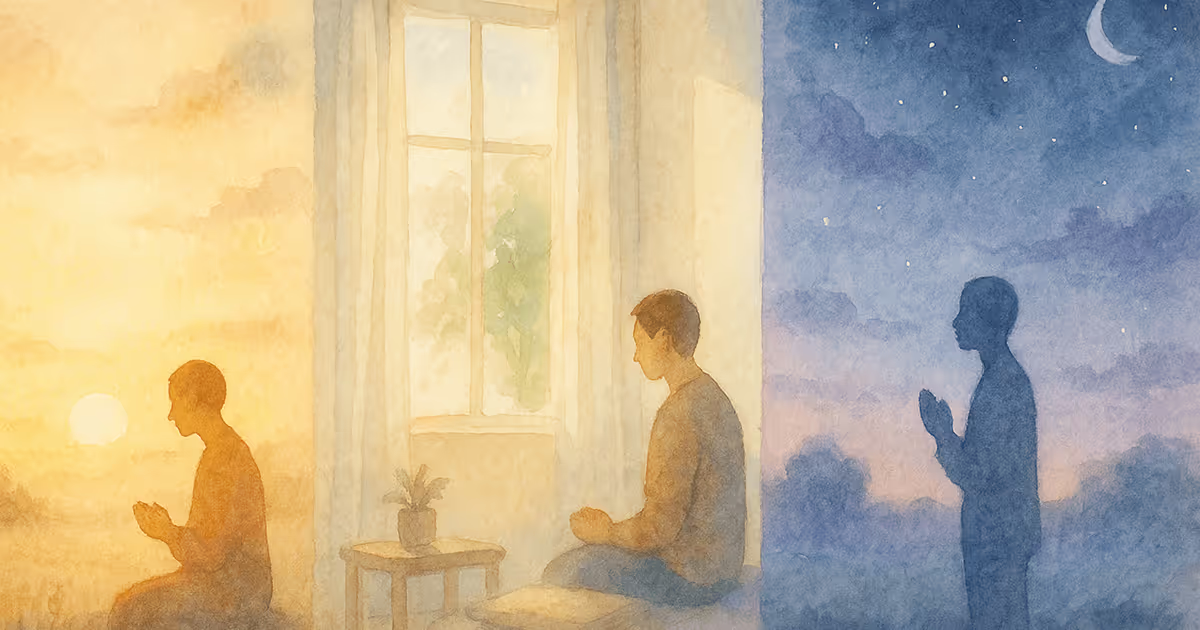
Prayer, no matter what position you take, must also be offered with honesty, simplicity, humility, and confidence. Your prayers can be short or long. They can be said in the morning, in the afternoon, in the evening, or before bed. God is there no matter when you pray.
What’s Most Important When Praying?
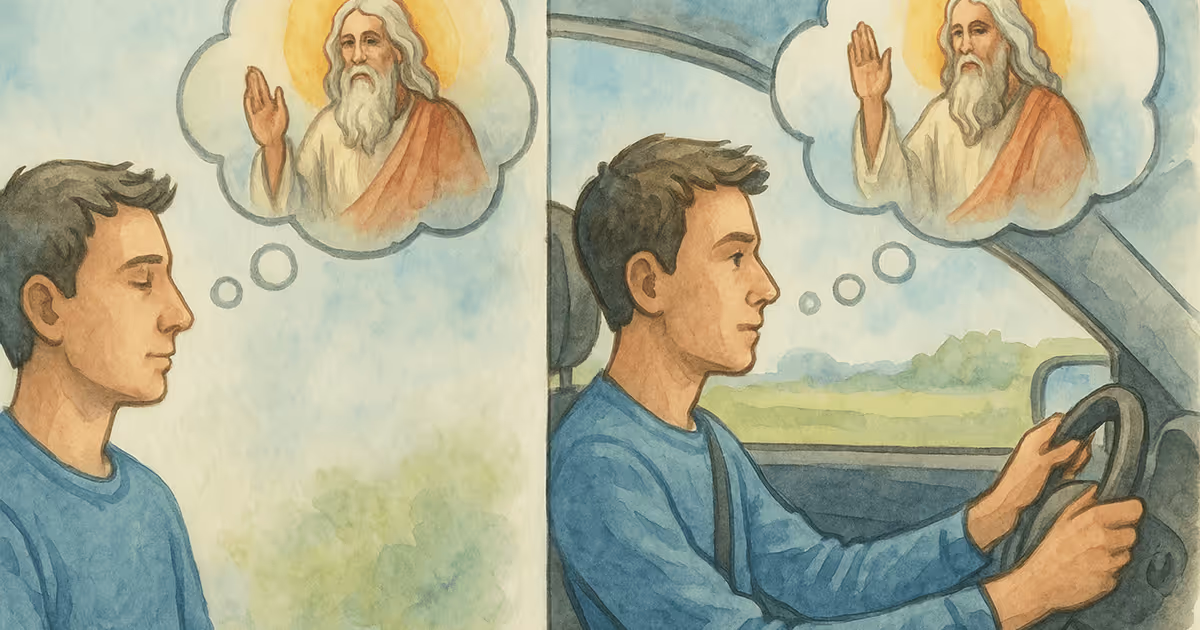
Your posture or position when praying isn’t the important thing to focus on when you pray. You can pray when you’re walking, driving, flying in an airplane, sitting on a park bench at lunch, or in the privacy of your own home, or in fellowship at church. The most wonderful thing about prayer is that the Bible tells us that God hears us if we pray with faith and belief.
Does God answer your prayers depending on what position you take when you pray? It doesn’t seem so, based on just a few of the examples commonly found in both the Old and New Testaments of the Bible.
Some people pray standing up, heads bowed and eyes closed, while others may lift their gaze to the heavens. Praying can be done on your knees with hands folded in front of you next to your bed, or it can be done sitting in a quiet place.
Praying can be done in public, at church, with your family, friends, or when you’re by yourself. This brief prayer posture guide emphasizes that. Another important thing to remember when praying, regardless of positioning, is that while your prayers are always heard when given with a true heart, it doesn’t really necessarily mean that you will receive what you’ve asked for, especially if it’s self-serving or greedy. That doesn’t mean you can’t pray for financial security for the sake of yourself or your family. It just means that God will answer your prayers as He wills it.
This short prayer posture guide emphasizes that it’s more important how you pray, the truth of what you’re communicating to God, and not so much your body positioning when you do so. Read your Bible, both Old and New Testaments and you will find dozens of references of how people prayed.